



















Mileage Log for Taxes: Everything U.S. Drivers Need to Know
May
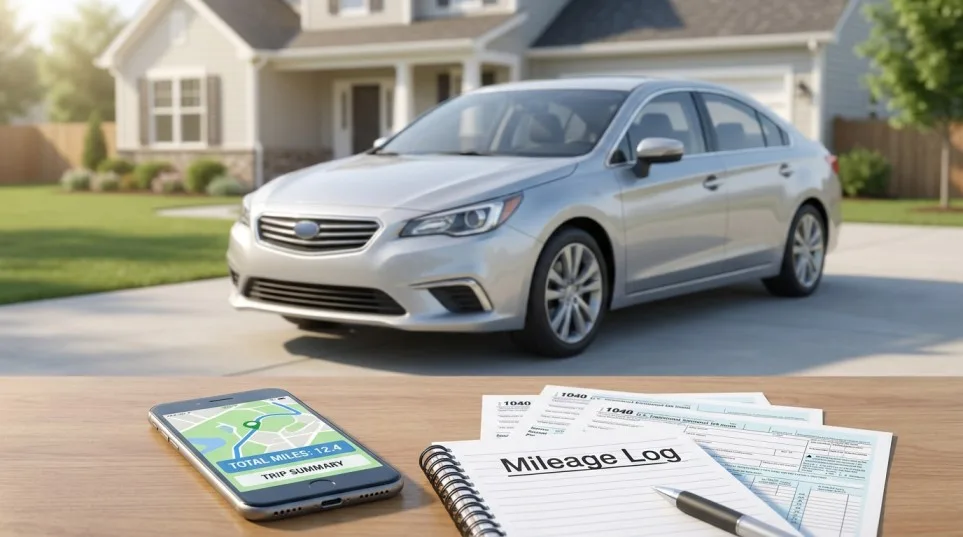
If you drive your car for work, the IRS may owe you money — but only if you can prove your miles. Whether you’re a self-employed contractor, a rideshare or delivery driver, a real estate agent, or a small business owner, a properly kept mileage log is the single most important document standing between you and a denied deduction. For the 2026 tax year, the IRS sets the standard mileage rate at 72.5 cents per business mile, which means every 1,000 documented business miles is worth $725 in deductions. A correctly maintained log can also protect you from costly back-taxes and penalties if the IRS audits your return.
Who Needs a Mileage Log?
The U.S. tax code treats vehicle use very differently depending on your employment status. The biggest groups who benefit from tracking business miles are:
- Self-employed individuals and independent contractors filing Schedule C — freelancers, consultants, real estate agents, photographers, contractors
- Gig economy drivers — Uber, Lyft, DoorDash, Instacart, Amazon Flex, and similar platforms
- Small business owners who use a personal vehicle for business
- Employees who get reimbursed by their employer under an “accountable plan” (the employer needs the log, not the IRS)
One important note for W-2 employees: under current federal tax law, unreimbursed employee vehicle expenses are generally not deductible on your personal federal return. This is a permanent change made by the Tax Cuts and Jobs Act and reaffirmed by recent legislation. If you’re an employee, your best path is to ask your employer to reimburse you under an accountable plan using the IRS standard rate.
The Two Methods: Standard Mileage vs. Actual Expenses
The IRS lets eligible taxpayers choose between two methods to deduct vehicle costs.
1. The Standard Mileage Rate
This is the simpler option. You multiply your business miles by the IRS rate for the year. For 2026, that’s 72.5 cents per business mile, up 2.5 cents from 2025. The rate already accounts for fuel, maintenance, insurance, and depreciation, so you don’t track those costs individually. You can still deduct business-related parking fees and tolls on top of the standard rate.
There’s a catch worth knowing: if you own the vehicle, you must choose the standard mileage rate in the first year the car is placed in service for business. After that, you can switch to actual expenses in later years. For leased vehicles, once you choose the standard rate, you must use it for the entire lease, including renewals.
2. The Actual Expenses Method
With this method, you track every cost of operating the vehicle — fuel, oil, repairs, tires, insurance, registration, lease payments, and depreciation — then deduct the business-use percentage. To calculate that percentage, you divide your business miles by your total miles for the year. So even if you use actual expenses, you still need a mileage log.
Advantages of Integrating PAJ GPS Logbook in Fleet Management
Which Is Better?
For most drivers — especially gig workers and high-mileage independent contractors — the standard rate is easier and often produces a larger deduction. Drivers of expensive or luxury vehicles, or those with very high actual costs, sometimes come out ahead with actual expenses. Running both calculations in your first year is the safest way to know.
What the IRS Requires in a Mileage Log
The IRS doesn’t mandate a specific format, but it does require what’s called adequate records. Under IRS Publication 463, every business trip needs four data points:
- Date of the trip
- Destination (the actual address or business name, not “client office”)
- Business purpose (specific — “meeting with John Smith re: Q2 contract,” not “work”)
- Mileage for the trip
You also need to record your odometer reading at the beginning and end of each tax year, and whenever you start or stop using a vehicle for business. Per-trip odometer readings aren’t required, but they make your log nearly bulletproof in an audit.
The most important word in IRS recordkeeping is contemporaneous — meaning records created at or near the time of the trip, not reconstructed in April from memory. Recent Tax Court rulings have made this point sharper than ever: in Khan v. Commissioner (2025), a small business couple lost their entire vehicle deduction because they reconstructed their log after the fact. The Court refused to estimate on their behalf.
You must keep your records for at least three years after filing the return.
Common Mistakes That Get Deductions Denied
A few patterns show up again and again in disallowed claims:
- Counting commuting miles — driving from home to your regular workplace is never deductible, even if you’re self-employed. Only miles between business locations, or from your home office to a client site, count.
- Vague descriptions like “errands” or “client visit” without details
- Round-number entries that suggest estimates rather than actual readings
- Logs filled in months later with no contemporaneous backup
- Mixing personal and business miles without a clear separation
Why a GPS Tracker Beats a Paper Logbook
Handwritten logs and spreadsheets have two big problems: people forget to fill them in, and the entries don’t carry the timestamps the IRS now looks for in the digital age. A GPS-based mileage tracker solves both:
- Automatic capture of every trip with the date, route, distance, and timestamp
- No missed trips — the device records whether you remember or not
- Tamper-evident records with a verifiable timestamp metadata trail
- Easy categorization of business vs. personal trips after the fact
- Exportable reports in IRS-friendly formats for your CPA or tax software
- Total mileage tracking that gives you the year-end odometer math automatically
For someone driving 15,000 business miles a year at the 2026 rate, that’s nearly $11,000 in deductions on the line. Missing even 10% of those trips because of a sloppy log costs you over $1,000 in real money.
How PAJ GPS Trackers Help
Our GPS trackers record every drive automatically and store the data securely in the PAJ FINDER Portal. You can review trips, label them as business or personal, and export clean reports at tax time. The device works in the background — no app to remember to open, no trips to log by hand. For independent contractors, fleet operators, and small business owners, that’s the difference between a deduction you can defend and one you’ll lose in an audit.
Quick Tips for an Audit-Proof Log
- Record every business trip with date, destination, business purpose, and miles
- Capture odometer readings on January 1 and December 31
- Log trips the same day or within a few days, not months later
- Use specific destination addresses and detailed business purposes
- Keep supporting records — calendar entries, client invoices, receipts — that corroborate trips
- Separate commuting miles clearly; never claim them
- Keep all records for at least three years after filing
A well-kept mileage log doesn’t just maximize your deduction — it gives you peace of mind that if the IRS ever asks, the answer is already on file.
This blog post does not constitute tax, legal, or financial advice. Tax rules change and individual situations vary. For guidance specific to your circumstances, consult a qualified CPA or tax professional.